


Conservation with Communities at the Centre: The Story of the South Rupununi Conservation Society


Since its inception in Guyana, the GEF SGP has funded initiatives span the country, from coastal areas to interior villages, addressing key environmental issues.
Conservation and Protection of the Red Siskins, Giant Anteater and Giant Armadillo projects- South Rupununi Conservation Society (2013-2026).
In the undulating savannas and forested landscape of Guyana’s South Rupununi, a quiet but powerful conservation movement has taken root. At its heart is the South Rupununi Conservation Society (SRCS), a community-led organisation working with local action to protect endangered wildlife, sustain traditional knowledge, and support community livelihoods.
Founded in 2002 following the rediscovery of the Red Siskin (Spinus cucullatus), a bird once feared on the brink of extinction, SRCS began with a single mission: to protect this iconic species and the savanna ecosystem it depends on. Over the past two decades, SRCS has grown into one of the country’s leading grassroots conservation organisations, known for its commitment to community-based research, environmental education, and intergenerational knowledge-sharing.
Strengthening Foundations with SGP Support
The GEF SGP has been instrumental in shaping SRCS’s growth. Through three key projects: the conservation of the Red Siskin, Giant Anteater, Research and Protection (2020-2022), and Community Managed Research and Conservation of Giant Armadillos and Giant Anteaters ( 2023-2026), SGP support helped SRCS expand its ecological monitoring, strengthen administrative systems, and build institutional capacity.
Red Siskin Conservation
In 2014, with support from SGP, SRCS trained local rangers in the techniques needed to conduct bird banding of Red Siskins in five South Rupununi communities This work has contributed to understanding the species’ movement patterns and range, while generating valuable ecological data to support long-term conservation planning. The project also raised awareness about the species and contributed to efforts to reduce illegal trade.

Giant Anteater Research: Using camera traps and ranger-led surveys and interviews, SRCS collected baseline data to inform both scientific understanding and community decision-making. The initiative fostered dialogue on land-use practices that support wildlife conservation and resulted in community conservation zones for this special species over nearly 200,000 hectares of savanna and forest in the South Rupununi.

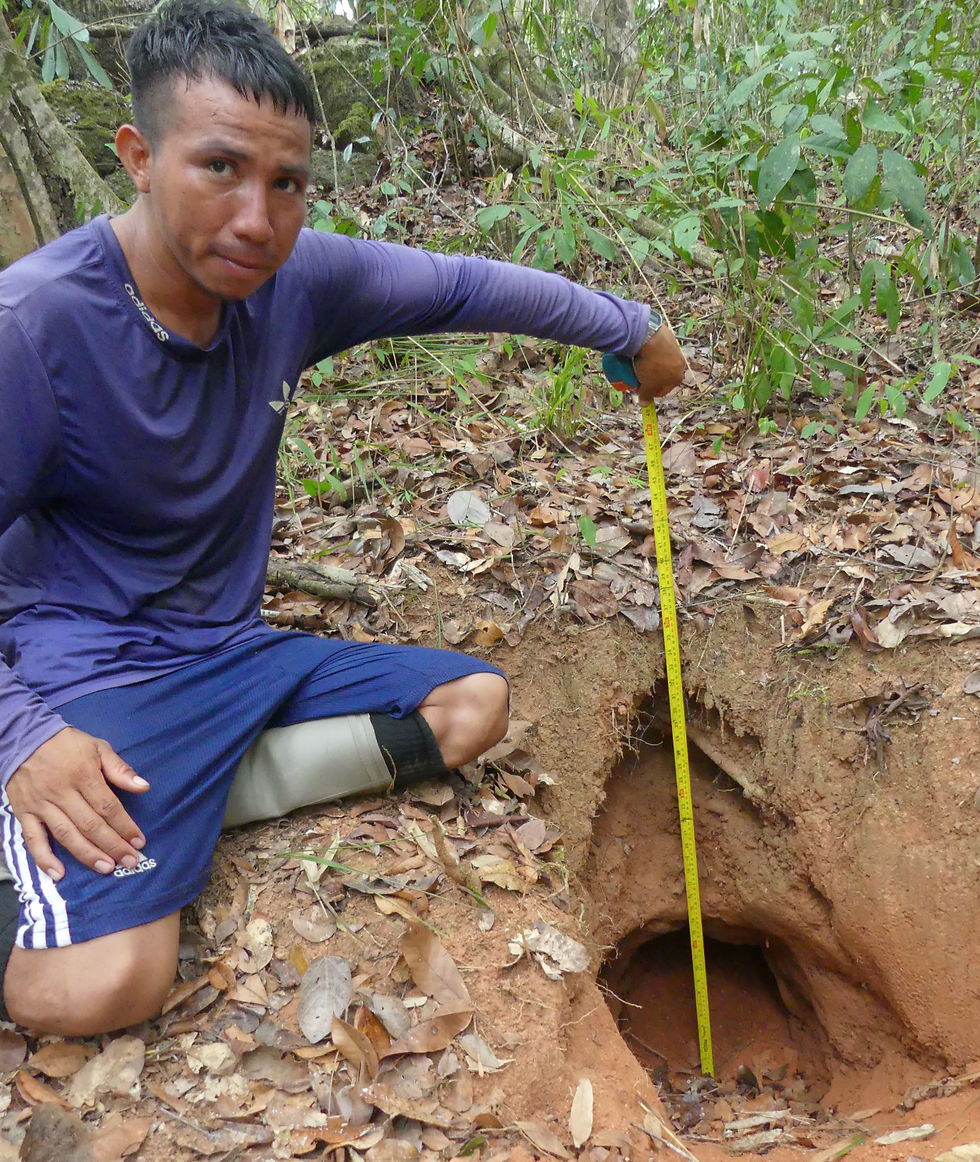
Giant Armadillo Research and Conservation
Community rangers in Shea, Awarewaunau, and Maruranau were trained to find and camera trap Giant Armadillo populations, contributing to the first systematic survey of the species in the region. The research will culminate in new community-led conservation initiatives to protect the giant armadillos and their habitat, with maps showing their range across the three communities, with story books, school sessions and a nature fair to build awareness of this fabulous species.
These projects laid the groundwork for broader environmental action, providing SRCS with equipment, training, and systems that continue to benefit its wider work across the Rupununi.
Expanding Impact: From Species Protection to System Change
Beyond its species-focused work, SRCS has broadened its scope to reflect the deep interconnections between biodiversity, culture, and community wellbeing. The organisation’s expanding portfolio now includes initiatives in environmental education, climate leadership, cultural revitalisation, and sustainable livelihoods. These projects aim to strengthen the resilience of communities and ecosystems alike, and include:
Environmental Education and Youth Engagement
SRCS delivers a tailored education programme combining scientific and Indigenous knowledge. Students have led their own projects, including the creation of a nature park and creation of waste management awareness sessions with the village.

Research on Fire and Wildlife
SRCS is documenting how fire affects wildlife populations and advocates for Indigenous fire management systems that balance ecological health with tradition.
Conservation of the Yellow-spotted River Turtle (supported by the Sustainable Wildlife Management Programme):
In Sand Creek, over 1,800 hatchlings have been released with community support, alongside an annual Turtle Festival to celebrate the effort.
Expanding Impact: From Species Protection to System Change

Research on Endemic and Threatened Species
Including the Hoary-throated Spinetail, Rio Branco Antbird, and local rabbit populations using genetic methods.
Creating Young Climate Leaders (supported through UNICEF and IDB)
Through workshops and mentorship, SRCS is empowering the next generation to take climate action grounded in local knowledge.

Sustainable Livelihoods and Ecotourism (supported through Guyana Tourism Authority)
SRCS is piloting a bird guide accreditation programme to build income opportunities around birdwatching tourism for communities.
A Model for Community-Led Conservation
At every stage, SRCS’s approach is defined by community ownership. Rangers are recruited from within villages, research questions are community-driven, and traditional knowledge is integrated with scientific methods. In 2024, SRCS President Leroy Ignacio was awarded a Whitley Award for his leadership in Red Siskin conservation, reflecting international recognition of SRCS’s locally rooted impact.

Looking Ahead
As Guyana’s savannahs face mounting pressures from climate change and land-use change, SRCS is committed to strengthening its partnerships with communities and institutions alike. Thanks to early investments from SGP, SRCS is equipped to lead long-term, inclusive, and effective conservation, where the people of the Rupununi remain at the centre of protecting its rich and fragile ecosystems.
Every GEF SGP project in Guyana is built on local knowledge and collaboration, empowering communities to take the lead. Through capacity building and resources, the program ensures that projects are sustainable and self-sufficient, benefiting both people and the environment.
As GEF SGP Guyana looks to the future, these projects lay the groundwork for a more resilient, sustainable environment, inspiring others to join the journey towards a greener Guyana.


Comments