


Turning Trash into Treasure: New Amsterdam’s Bold Leap Toward a Circular Future

Creating a Circular Economy Through The Recycling and Upcycling of Plastics in New Amsterdam
On the eastern bank of the Berbice River, where the warmth of Guyanese hospitality meets the pulse of community life, something remarkable has been unfolding;, something quietly powerful, driven not by multinational corporations or billion-dollar budgets, but by a church, a town, and a shared vision.
At the heart of New Amsterdam, the Grace Temple Assembly of God has taken up a challenge that stretches far beyond scripture: tackling plastic pollution head-on, one discarded bottle at a time. In a world drowning in single-use plastics, with many countries lacking the means or infrastructure to properly manage the deluge, the people of East Berbice chose action over apathy. With funding from the GEF SGP, they launched an ambitious initiative in 2022: “Promoting a Circular Economy through the Sustainable Recycling and Upcycling of Plastics in New Amsterdam.”
The name might be long, but its mission was beautifully simple, “turn waste into worth and in doing so, protect the environment, inspire a community, and educate a new generation”.
A Problem Too Big to Ignore
Stroll through many Caribbean towns and the story is the same: brightly coloured plastic bottles and food containers choke drains, gather in yards, and silently strangle ecosystems. In New Amsterdam and along the Lower Corentyne, this reality had become more than just an eyesore; it was a public health risk, an environmental emergency. It wasn’t just about trash. It was about dignity, health, opportunity, and legacy.
Recycling as Revival
The project took on an ambitious target: intercept at least 300kg of plastic waste annually, diverting it from landfills, drains, and riverways. But this wasn’t just a clean-up. It was a transformation. Under the guidance of Grace Temple and with support from 7 secondary schools and the Environmental Protection Agency, and community leaders, a core group of passionate residents and students learned how to:
Identify different plastic types
Operate shredding and moulding machines
Understand safety protocols
Recognise the environmental costs of inaction
And then came the creativity.


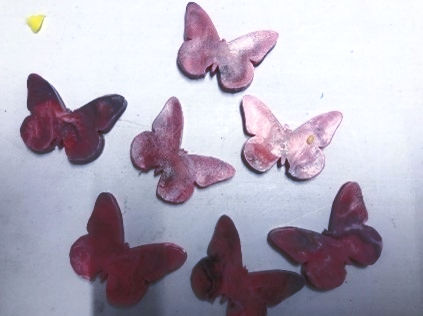
Discarded plastic bottles became plant pots. Coloured fragments were moulded into keyrings, earrings, rulers, beautiful, functional symbols of renewal. Every item carried a story, a message: "This once polluted our town. Now it empowers it."
Learning, Leading, Lifting
Beyond the physical transformation of waste, perhaps the most powerful shift was internal.
Young people, once indifferent to the rising tide of garbage, began asking questions about sustainability. Women, many of whom had never operated industrial equipment before, learned the skills of small-scale manufacturing. The project prioritised inclusion, aligning itself with the global Sustainable Development Goals, especially:
Goal 3: Good Health and Well-Being
Goal 5: Gender Equality
Goal 8: Decent Work and Economic Growth
Goal 10: Reduced Inequalities
Goal 11: Sustainable Cities and Communities
Goal 15: Life on Land
The results were measurable:
0.309 tons of waste intercepted
73kg of plastic recycled
Improved drainage, fewer floods, healthier streets
While these numbers may seem small on a global scale, for a pilot project in a mid-sized town, they represent a groundswell of potential.
From Pilot to Possibility
Was it perfect? No.
Some planned activities, like concrete casting and cross-country exchanges, remained unrealiszed. Production and sales goals weren’t fully met, and the dream of sustainable employment wasn’t yet within reach.
And yet, to measure the project only in kilograms or dollars would miss its deeper success.
This was about planting seeds, not just of trees, but of consciousness, capacity, and community change.
What’s Next?
There’s ample room to scale. More machinery, better market linkages, stronger training programmes, and expanded partnerships could transform this pilot into a national model. And with continued support, the vision of a true circular economy in Guyana doesn’t feel far-fetched at all.
In a world desperate for answers to the plastic crisis, New Amsterdam offers one born not from technology alone, but from community courage, creativity, and care. Because sometimes, the most powerful revolutions begin not in boardrooms or laboratories, but in a church, with a bottle, an idea, and the will to change.

Grace Temple Assembly of God church, located in New Amsterdam, Berbice, is a member of the Assemblies of God in Guyana. The church’s mission is to connect, empower and mobilise people for a meaningful work and life mission in each stage and segment of their lives.
The church’s reach has expanded through innovative growth strategies and new outstations at Grace Empowerment Centre, Fyrish, Corentyne and Grace Victory, Assembly of God at Number 19 Village, also on the Corentyne and Grace Deliverance Temple at Brother’s Village, East Bank Berbice.
Under the leadership of Reverend Doreen Henry, Grace Temple became deeply involved in community outreach programmes such as the Grace School Nutrition Programme, Grace Help & Care ( monthly hampers to families in need),
The Grace Penny Bank, and yearly educational bursary initiatives for academic achievements, further cementing its role as both a spiritual and social pillar in the community.


Comments